
What You Need to Know
- 📉 European markets experience a shaky start to the week, with major indices like the Stoxx 600 and CAC 40 witnessing declines.
- 💷 The British pound and euro strengthen against a weakening U.S. dollar, reacting to ongoing trade tensions and protectionist policies.
- 🏅 Gold prices surge to weekly highs, affirming its status as a safe haven amid geopolitical uncertainties.
- 🛢️ Oil markets respond with a rise in Brent Crude futures, influenced by OPEC+ supply announcements and market speculation.
- 💊 French pharmaceutical company Sanofi strategically acquires U.S.-based Blueprint Medicines for $9.1 billion to expand its rare disease portfolio.
The global financial landscape is continuously shaped by political decisions and market sentiments. As tensions rise due to international trade policies, investors and businesses across Europe brace for impact. With the U.S. taking a firm stance on tariffs, European stock markets are experiencing notable fluctuations. This article delves into the current state of European financial markets, examining the implications of recent developments in trade policies, fluctuations in currency values, and their effects on various sectors. At the heart of these discussions is the dynamic relationship between Europe and the United States, a bond that is both cooperative and competitive, influencing economies worldwide.
European Stock Markets: A Tumultuous Start to the Week
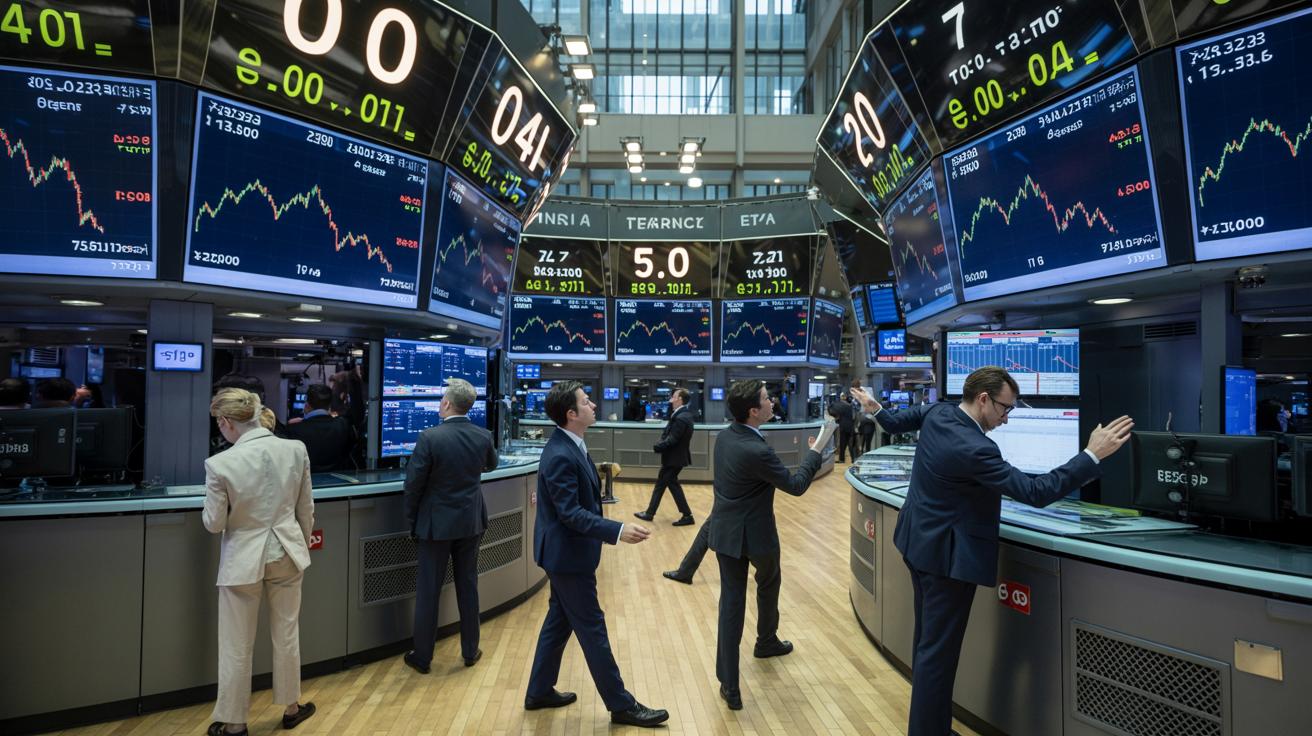
European equities are facing a challenging start to the week, as evidenced by the downturn in major indices. On the first trading day of June, the Stoxx 600 index saw a decline of 0.18%. This trend was mirrored in France’s CAC 40 and Germany’s DAX, which fell by 0.43% and 0.22%, respectively. The only outlier was the U.K.’s FTSE 100, which managed a slight increase of 0.08%, buoyed by a 0.57% rise in oil and gas stocks.
This decline in European markets can be attributed to the recent decisions by the U.S. administration to impose stricter tariffs on imports. Notably, the tariff on steel imports has been raised to 50%, a move that has caught many by surprise. Such decisions have resulted in uncertainty and volatility across global markets, with investors wary of the potential ripple effects on industries dependent on steel and other imported materials.
 Continue exploring with this post : Love Horoscope For July 19, 2025 — Unexpected Revelations Shake Your World
Currency Fluctuations Amid Trade Tensions
Amid these market shifts, currency values are reacting in real-time to geopolitical developments. The British pound witnessed a 0.7% increase against the U.S. dollar, briefly surpassing the $1.35 mark—a position it had struggled to maintain in the previous week. Similarly, the euro rose by 0.75% against the dollar, a reflection of the greenback’s recent decline.
Analysts attribute this dip in the U.S. dollar’s strength to the current administration’s protectionist policies and a perceived desire for a weaker dollar. Such policies have accelerated the dollar’s decline, contributing to the “Sell America” narrative. As the dollar weakens, European currencies gain strength, impacting trade balances and economic strategies in the region. Understanding these currency dynamics is crucial for businesses and investors navigating the current market complexities.
Impact on Commodity Markets: Gold and Oil Surge
The uncertainties in trade policies and market reactions have also reverberated through the commodity markets. Gold prices experienced a significant surge, rising by 1.5% to reach $3,337 an ounce, marking a weekly high. This increase underscores the metal’s continued appeal as a safe haven in turbulent times, as investors seek stability amid the ongoing trade tensions and geopolitical conflicts.
Oil markets are also responding to these developments. Brent Crude futures saw a 2.29% increase, trading at $64.22 per barrel. This rise comes on the heels of OPEC+’s announcement of a 411,000 barrels per day supply increase for July, aligning with earlier increments. However, the rally in oil prices may also be driven by the perception that the supply increase could have been more substantial, fueling speculation and strategic positioning among traders.
Corporate Movements: Sanofi’s Strategic Acquisition
Amid the financial market upheavals, corporations are also making significant moves to bolster their positions. French pharmaceutical giant Sanofi recently announced its acquisition of the Massachusetts-based Blueprint Medicines Corporation for an equity value of $9.1 billion. This strategic acquisition aims to expand Sanofi’s portfolio in the realm of rare immunological diseases.
Central to this deal is the drug Ayvakit/Ayvakyt, already approved in the U.S. and EU for treating systemic mastocytosis. Sanofi’s move highlights the importance of strategic investments in specialized sectors, especially during times of broader market volatility. Such acquisitions not only enhance a company’s market position but also reflect the ongoing shifts in the global healthcare landscape, where innovation and strategic collaborations are key.
 Continue exploring with this post : 3 Zodiac Signs Experience Unparalleled Growth & Prosperity On July 19, 2025
As the world watches these developments unfold, the interplay of trade policies, market reactions, and corporate strategies continues to shape the global economic landscape. How will businesses and investors adapt to these changes, and what future shifts might we anticipate in the global markets? The answers to these questions will define the economic trajectory in the coming months and years.
Did you like it?4.4/5 (25)





10 comments
zoeystardancer
Thanks for the update. I guess it’s time to brush up on my economics knowledge! 😊
olive
These trade tensions are like a soap opera—every day something new! When will it end?
oscar
Is it just me, or does Sanofi’s acquisition sound like a big deal? $9.1 billion isn’t pocket change!
GizmoDreamweaver
Finally, some good news for oil investors! But what does this mean for gas prices at the pump?
joshua2
I’m curious if this “Sell America” narrative is just a phase or something more serious. Thoughts?
DylanFlare
Can someone explain to me why the British pound is suddenly stronger? I thought Brexit messed everything up. 🤔
annaraven
So, does this mean vacations in Europe just got more expensive for Americans, or am I missing something?
Anthony8
Why do gold prices always go up when there’s chaos? It’s like the drama queen of commodities. 😂
tristancascade
Thank you for breaking this down. It’s fascinating to see how interconnected global markets really are!
addisoninferno
Wow, things are getting wild with these tariffs! Wonder how it’ll all pan out for the small businesses in the US?